
Education and Participation Benefits
Reducing bureaucracy of the Education and Participation Benefits through digitalization
The Education and Participation Package (BuT) was created to provide children and adolescents with equal opportunities for education, social participation, and personal development. However, many do not receive these benefits or must navigate a significant amount of bureaucracy to do so. At the same time, implementing the program is resource-intensive for local governments. DigitalService is working with the Federal Ministry of Education, Family Affairs, Senior Citizens, Women, and Youth (BMBFSFJ) to develop solutions for the administration based on a problem analysis.
Since 2011, children and adolescents from low-income families have been eligible for support through the Education and Participation Package (BuT), such as for school lunches or sports clubs. However, many families do not take advantage of these benefits. This is partly because the forms are too complicated or because they fear stigmatization. Implementation on the administrative side is also complex: approximately 400 counties and independent cities each implement the BuT program independently.
According to the coalition agreement, the idea of using a participation app to give children less bureaucratic access to special school programs as well as sports, music, cultural, and other recreational activities will be pursued. In addition, a feasibility study will examine the introduction of a children’s card for all children eligible for child benefits. In addition, the Commission on Welfare State Reform recommends making BuT simpler and less bureaucratic and to digitalize the process. An app with tracking and booking features is to be evaluated.
The (BMBFSFJ) commissioned DigitalService with identifying possible solutions how to make BuT more digital and easier to access. The goal is that the beneficiaries actually use the service and to make them accessible in everyday life. Another goal is to reduce administrative effort and cost of application, review, and data exchange. Everyone involved should benefit from the improvements and efficiency.
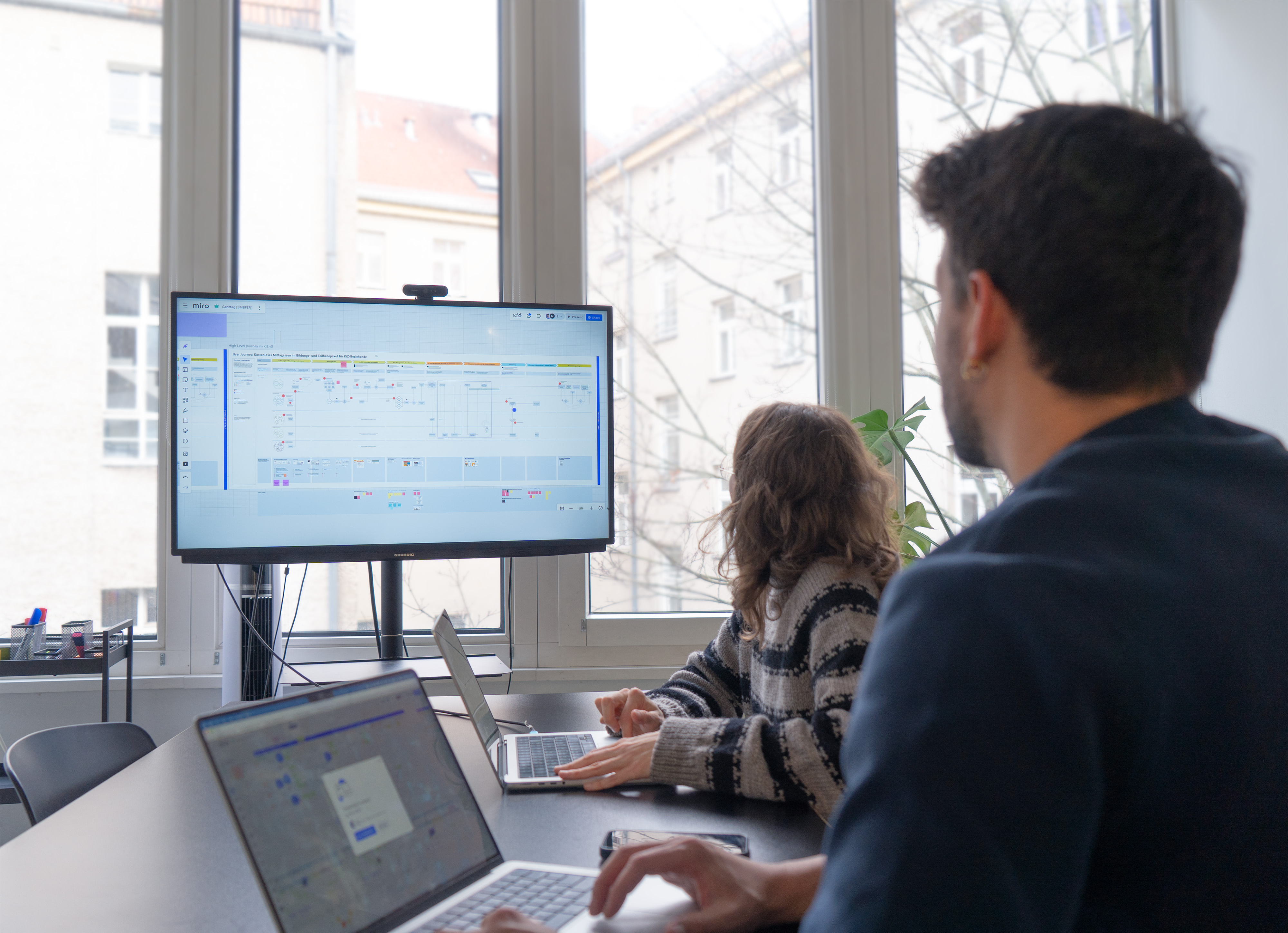
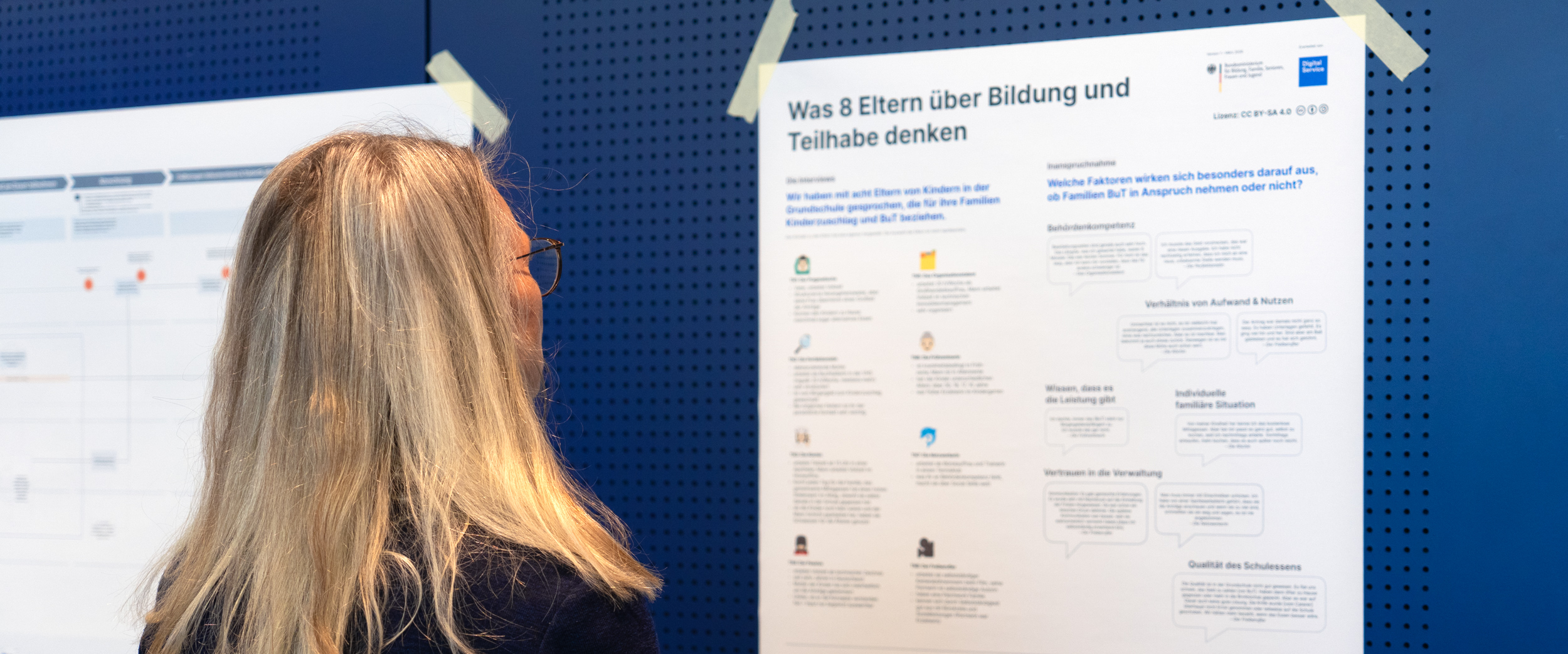
The project is implemented in stages through an agile, iterative process in accordance with the service standard to continuously learn and make informed decisions. In the spirit of continuous discovery and ongoing user research, we analyze the actual needs of families as well as the participating government agencies. To do this, we rely on qualitative interviews, research, and process analyses. We continuously involve relevant stakeholders in the development process. To this end, we use cross-departmental and cross-level engagement formats, such as workshops and practical assessments.
Using early prototypes and field tests, we validate potential solutions and assess their practical and digital feasibility in order to quickly test our assumptions. Based on this, we compare existing systems with new approaches. We also conduct a cost-benefit analysis and develop a robust, evidence-based implementation plan.
Status: Development
Special features
- The project is based on the findings from the preliminary project on free lunches as part of the Education and Participation Package (BuT).
- Cross-departmental and cross-level engagement formats ensure administrative feasibility and digital suitability.
- The current government's coalition agreement calls for unbureaucratic access to special educational programs as well as sports, music, cultural, and other recreational activities through the concept of a participation app.